Hair Loss #1
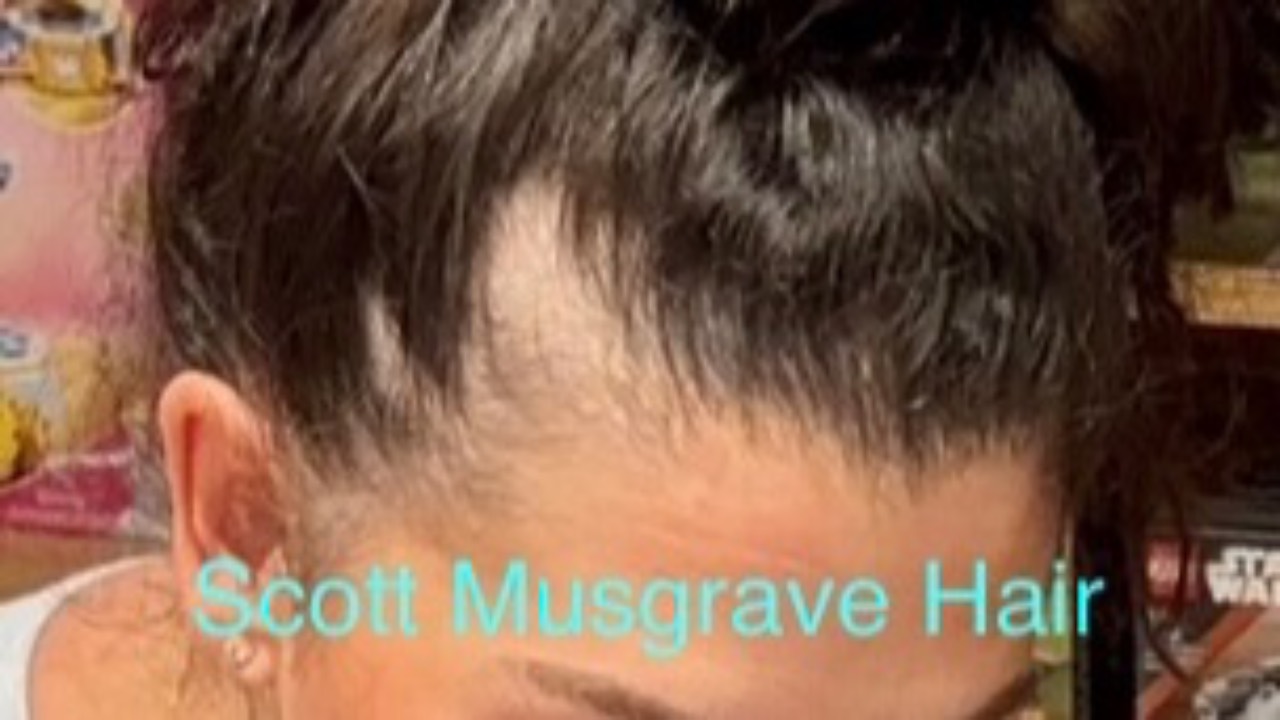
This is a multiple blog mini-series - I will mention a variety of concepts and ideas of what contributes to hair loss based on my own experience working as a professional hairstylist that specializes in working with wavy & curly hair.
I am not a Doctor, Therapist or specialist of hair loss - everything I am sharing is experience only and is advice based on my own experience or the experiences of my own clients that tell me their own stories and solutions.
You are responsible for doing your own research and are advised to consult with a medical expert for all issues related to your own health, wellbeing & hair loss.
Every week in my studio AND online I get asked about some form of concern for hair loss. I have been a hairstylist for over 40 years and I have worked with thousands of heads of hair in my studio and online learning of discoveries of what I have found is pretty much common sense that has been lost or forgotten about over time.
First thing I share is about shedding and breakage.
We loose around 100 hairs a day - and with over 140-160,000 hairs on our head it is usually not noticeable until you cleanse your hair and apply conditioner with your hands it starts filling up with a small birds nest of hair. Since we do not brush our hair during the day - or our hair does not blow around out in the wind letting loose the hair that sheds like those that have straight hair - our stays 'trapped' within our curls until self-care day.
Many of you go 2-5 days between cleansing and that means you have 200-500+ hairs coming out all at once....this is normal. Hair comes out and grows back in most cases. The hair that is growing out is short and noticeable near your scalp - everyone has it and it would be weird if you did not have it.
Should you get small patches of bald spots then you want to ask your doctor about it. If you have concerns - ask your spouse to move hair around on your head to see if there are small areas/sections on your scalp that have no hair and if so, check with your Doctor.
I have had a handful of clients thank me later for catching things in their early stages from telling them to get it checked on.
Within this first mention: I am NOT A FAN OF BRUSHING YOUR HAIR DRY OR WET.
Back in the day - we People of Curl NEVER brushed our hair. Past couple of years has increased sales of what is called a 'wet brush' or a 'styling brush' that can make life easier (marketing) by using a brush on wet hair to apply your styling products. This gives you a manufactured look to your finished style. Most of the time it is flat at the roots, with a bendy curve finger wave appearance leading down to curls at the bottom- this is 2-3 different looks going on with one head of hair.
For me, as a curly hair specialist I get a false read of where and how to cut your hair that if you come in with a 'manufactured curl pattern' - I can not guarantee the cut will do well when you wear/style it natural (as taught in Cultivate Your Curls) or even when you style it with a brush again as you can not guarantee it will 'style' the same again.
AND - with repetition you will 'stress' the hair - as our strand of hair has a raised cuticle that is more vulnerable to the stress that brushing causes and will usually cause breakage that will create MORE shorter hairs around the top and mid-length that we call "halo". You may be wondering and noticing where all of these different lengths of hair are coming from that hover out and around your head of hair.
Combine natural shedding WITH breakage will cause hair to look thinner and more stringy as your hair grows. I believe it can lead to more tangling as well.
I am a firm believer that most of my clients DO NOT NEED TO WET STYLE THEIR CURLS WITH A BRUSH. Only if you have a massive amount of hair, massive amount of knots and tangles or medical issues with your hands will you benefit from using a detangling comb or wet brush....the rest of you do not need a wet or wet styling brush.
I have seen hair go from stringy to more full BY STOP USING A WET BRUSH.
This will make some salon owners and manufactures red in the face reading this - as salon sales are big for retailing wet brushes.
I talk to many salon owners that are NOT fans of wet brush styling as it takes MORE TIME in the salon to teach and perform! Yes, I am biased as I know most people reading this can learn to style their hair with their hands. Most stylists and consumers are frustrated with teaching or learning how to style with hands only and think it is easier to just use a brush.
Also, straight hair is designed with a cuticle that lies flat along the hair strand - it is stronger and more shiny than curly hair that can have a cuticle that is raised up a little or a lot, looks more dull - therefor straight hair can take the brush abuse more than those of us with curly hair.
Many of my clients have flat cuticle at root area (it is shinier at the root) and raise up near the ends (that looks a bit dull)! This means we have multiple porosity areas on one head of hair (as explained in Cultivate Your Curls) - as I teach a Zone System of learning to manage your hair. If you brush style your hair you are making it flatter than usual and trying to figure out how to get more fullness at the roots - and it's not possible for most with a flatter zone one section! So, many of my clients are being mislead with IG, TikTok or YouTube videos showing fullness that they can not achieve.
Another hair shredder is towel drying and sleeping on a cotton pillow case is just ruffling up the cuticle more and causing breakage.
Which is why I do not recommend using a towel or micro-fiber towel on our hair or sleeping on a cotton pillow case.
I recommend this towel HERE and this pillow case HERE.
Yup - our hair is more sensitive than straight hair. When you stop shredding your hair with a brush, cotton pillow case and towels it does not mean you wake up with beautiful hair that you have to do nothing to style it - you still have to do a refresher routine, but what happens is your hair gets better over time from not stressing it out anymore. These actions alone have helped many of my clients see and feel the difference in their hair - by implementing these simple steps - over time - to have better hair.
Second topic I bring up is about how the diameter of our hair changes over time. Puberty to 30-40's hair STRAND is thicker and when reaching age ranges as we ages (as mentioned in the 30's to 40's) the strand of hair goes thinner and can break off easily around the hairline producing a receding hairline that you may never had before - or, baby hairs that just do not get long anymore. Just about everyone I know experiences this.
There is a term called Miniaturization that talks about hair strands getting thinner over time and it hear it in my clients that tell me in their youth and 20's having a thick pony tail and over time it has gotten smaller.
This is one area that we really can not do much about - it just happens and the reality is to embrace it as best as you can compared to stressing out about it.
We can be our own worst critic and have self-talk that is harsh about who we are or what we look like - so, a little bit of self-care and acceptance will go a long way!
Third topic I mention is hormones. Puberty is when many people go from wavy to curly - or curly to wavy, lighter to darker.
Many women have children and get wavy or even curly hair - other moms lose their waves and curls after having a child/children.
Ashley shared with me her own hair loss associated with having a child and I will share another photo in the next blog of how quickly her hair returned compared to many other clients I have.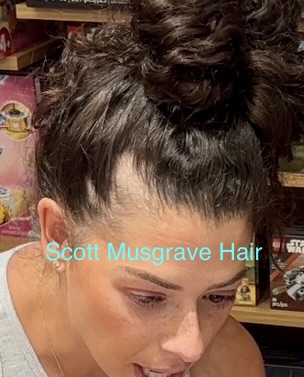
Menopause will cause loose wavy hair to go curlier or curlier to more wavy. I have many clients that embrace their curls for the first time in their life with my online course only to have it go looser within a few years of going into menopause - and some go even curlier that never had wavy hair in their life.
People with thyroid issues have hair changes the most in my studio - it can be thicker at one visit and all of a sudden thinner the next visit. There seems to be a constant battle with managing their med's to find a balance.
Look at your mom & dad in some cases - even your grand parents - as it can reveal possibilities of what your hair may do.
Fourth topic I mention is diet, stress (mental AND physical), surgeries, the covid shed - and combinations of all of what I mentioned so far to include genetics.
For this mention I include a discussion of what is NOT discussed through leaning meditation, stress management, a body scan with breathing to consciously manage your nervous system instead of letting the news, the worlds issues, work drama, family issues and everything else that is unconsciously managing your nervous system and life. GO FOR A WALK, EAT PROTEIN, DRINK A LOT MORE WATER, SLOW DOWN, EAT WELL and EXERCISE can do a world of good more so than looking for a shampoo or oil treatment to help with hair loss.
In part two of this mini-series I will mention what HAS worked for many of my clients that have had some success with managing hair loss and I will share them with you.
Before I do so - I would love to hear from you: WHAT HAS HELPED YOU?
Contact me at [email protected] with any tips or recommendations.
For now,
Scott Musgrave: Founder of Curly Hair Artistry, Cultivate Your Curls and business owner of Scott Musgrave Hair.
Stay connected with news and updates!
Join our mailing list to receive the latest news and updates from our team.
Don't worry, your information will not be shared.